

Biological
Sustained cortisol elevation is linked to disrupted sleep, energy regulation and motivation, effects that can persist even with rest.

You're tired in a way that a good night's sleep doesn't touch. You already know rest isn't the problem because you've tried.
Both burnout and chronic stress are a nervous system that's been running a low-grade emergency for months, sometimes years, until it stops registering the difference between a genuine crisis and an ordinary Tuesday. A long weekend barely touches it. Even a proper two-week holiday tends to wear off within days of being back.

Not every point here needs to apply, but this may resonate with you if:
Chronic stress without adequate recovery disrupts your nervous system and stress hormone response, making it progressively harder to relax, sleep or feel motivated, even once the external pressure lifts. Left unaddressed, your stress response settles in as the new baseline instead of an occasional state, which is why a holiday rarely produces lasting relief.
What's driving it
Sustained cortisol elevation is linked to disrupted sleep, energy regulation and motivation, effects that can persist even with rest.

Burnout often develops in roles carrying significant responsibility for others, which makes it harder to step back without guilt or a sense of risk to the people depending on you.
High performers frequently push through early warning signs, exhaustion, irritability, disconnection, because pushing through has always worked before.
All seven disciplines of the Ascendant 7/21 Method™ run through every program, including yours. For burnout and chronic stress specifically, three lead the clinical work because of how directly they retrain the nervous system's baseline stress response. The remaining four create a strong foundation of body and mind for the deep work happening in the three core disciplines.
Where the work starts
Cognitive and behavioural work rebuilds resilience and sustainable motivation, addressing the patterns that led to chronic overextension in the first place. Neurofeedback trains the brain to shift out of the chronic high-arousal or dysregulated patterns and EMDR for addressing root cause.
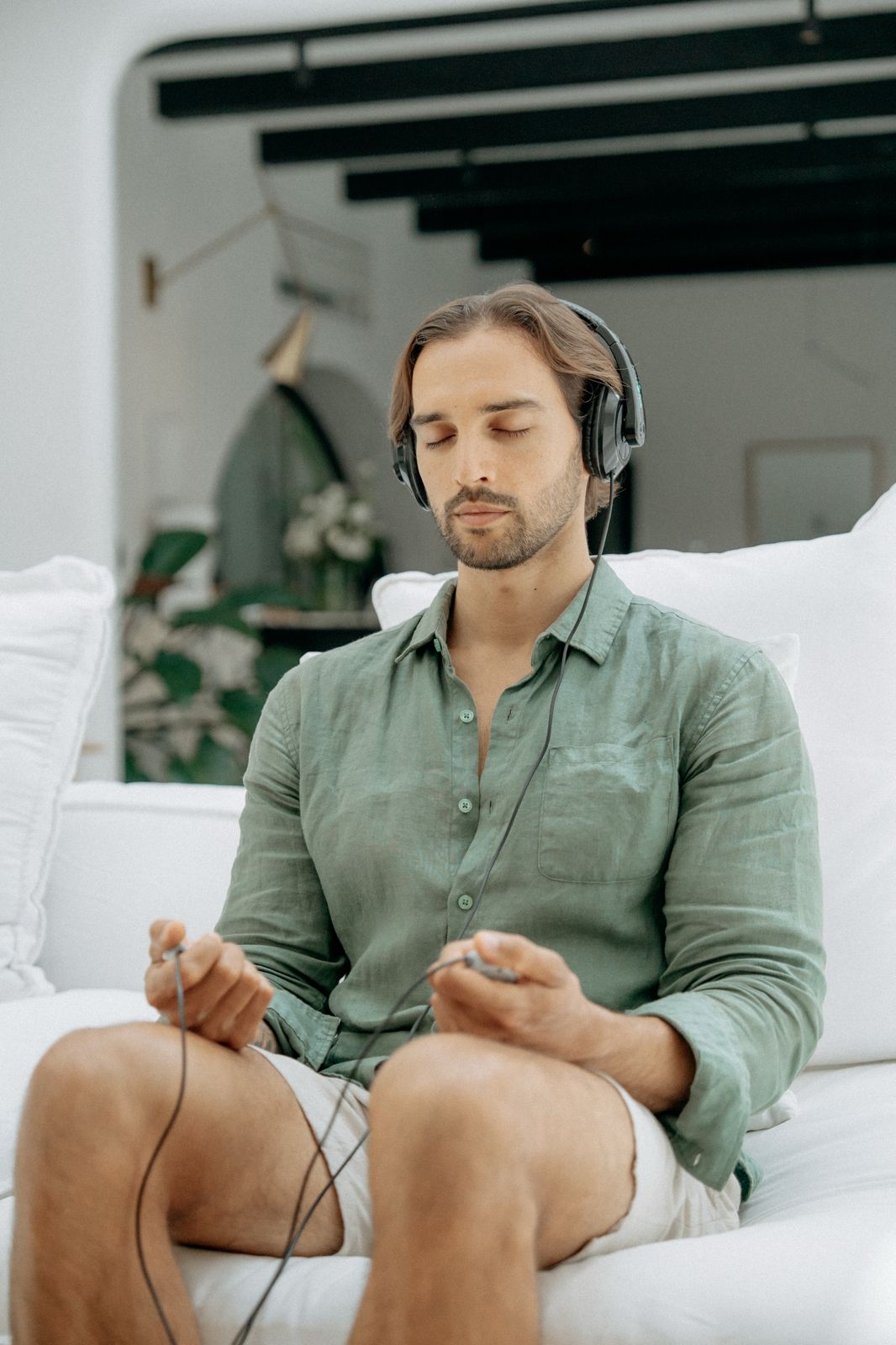
Biofeedback and somatic regulation (Heart Variability Training (HVT), Vagal Tone and breathwork) train the nervous system to recognise and return to a genuine resting state, not just a temporary lull between stressors.
Rather than treating exhaustion as something to push through, the focus here is a full medical and psychiatric review, sleep assessments, cardiovascular screening and full blood panels, mapping the physical toll prolonged stress has already taken, with medication support where it's clinically indicated.

Structured movement therapy supports healthy stress hormone regulation, doing physiologically what rest on its own can't.

Complementary practices from Traditional Chinese Medicine, kinesiology, reiki, and positive psychology support the program alongside evidence-based care.

Chronic stress impacts the gut. We work with adrenal support supplementation, IV therapy, and sleep focused protocols to help restore it.

Adrenal and metabolic function take a hit under chronic stress, which is why targeted nutrition is built into your program, not left to chance.

Neurofeedback and somatic regulation retrain your nervous system's baseline, building energy that lasts through a full week rather than something a weekend has to manufacture.

Founders, executives and high performers whose burnout hides behind competence, this is specifically who the program is built around, not a generic stress-management protocol.

From stabilisation to aftercare, it's the same clinical team the entire way, no handoffs, no repeating your history to a new face partway through.
6 Phases, each with a distinct clinical purpose.
Your clinical team starts with a full medical, psychiatric and psychological assessment. This phase is about understanding what prolonged stress has done to your body and nervous system before anything else happens.
Pushing through has usually been protecting something, a sense of control, of being needed, of being the one who doesn't drop the ball. This phase traces the stress response back to what it's been guarding, not just the exhaustion sitting on top of it.
Biofeedback and somatic regulation work directly on your nervous system's baseline. It's not about convincing you to rest more, we help you build a genuine capacity to come down from high alert, so recovery stops being something you hope for and starts being something you have a pathway to.
Burnout tends to cost the people closest to you first, the ones who got whatever energy was left over. This phase turns toward repairing that, with an optional partner or family session, or a structured reintegration-to-work session, if easing back into work is part of your plan.
When output has been the main measure of your worth for years, rest can start to feel like failure rather than recovery. This phase isn't about wanting less, it's about separating who you are from what you produce, so the ambition and drive that got you here keep running, just on fuel that doesn't cost you your health to sustain.
Your final phase turns toward the return, not just the recovery. A 4-12-week aftercare plan is built with your clinical team and pressure-tested against the conditions that burned you out. Switching off at the end of a day stops requiring collapse, and rest starts actually restoring you again.

Burnout and chronic stress treatment runs the standard 3 weeks of the Ascendant 7/21 Method™, with extended 4 to 8 weeks programs available where a longer consolidation period is clinically appropriate. A 2 weeks program is available for more mild-moderate presentations.
Constant, high-stakes decision-making takes a measurable toll that's easy to normalise when it is part of the role.
When people or outcomes depend on you, stepping back can register as risk rather than rest, keeping your nervous system engaged even during supposed downtime.
The same capability that built a career can delay recognising burnout until it is well established and the usual response, working harder, stops producing results.
Every program is clinically led by Zahra Ciardi, a Registered Psychologist (AHPRA) with 12 years experience in the mental health industry; 8 of those years as a Psychologist.
A holiday removes the immediate pressure but rarely changes how your nervous system responds to it. A change in location is rarely enough as burnout is carried mentally and physiologically. This is why most burnt out people continue to feel exhausted after a trip because they've been mentally ruminating, rehearsing, worrying, and planning.
This program combines biofeedback, somatic regulation and movement therapy to retrain that response directly, which is why the change tends to hold once you return to normal life.
Yes. Most clients arrive before a full breakdown because they can see where the pattern is heading. Earlier intervention is generally more effective, not a lower priority.
We recommend minimal contact so your nervous system can genuinely downregulate, but we will discuss this with you, based on your circumstances and role.
Yes, in the details. They often overlap, and if you're dealing with both, your program treats them together. But burnout stems from prolonged stress on your body, so the structure and pacing differ from a program built primarily for depression.
Both. Feeling genuinely rested is part of the outcome, but the main goal is leaving with a re-trained stress response and practical systems that hold once you are back in your usual environment.
You leave with a personalised aftercare plan developed with your clinical team and we stay with you for weekly aftercare sessions from 4-12 weeks depending on your package. You also have options for extended stays or ongoing remote support depending on your circumstances.
Our clinical team will walk through your history, your current state and what has already been tried, then give you a direct answer on whether Ascendant Bali is the right fit for you.
Begin a Confidential Conversation